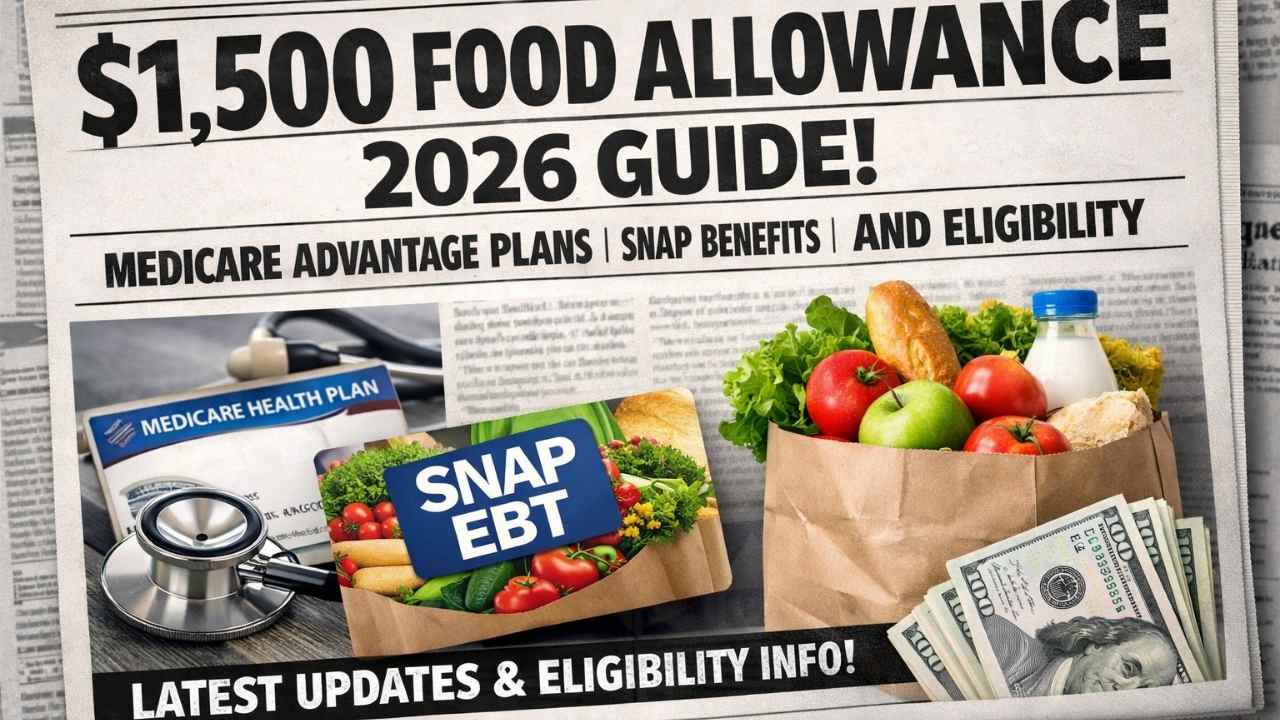
Food Allowance 2026: The idea of a $1,500 grocery allowance in 2026 has gained attention online, especially among seniors and low-income households. Many people believe it is a direct government payment available to everyone, but the reality is more complex and depends on specific programs and eligibility conditions.
In truth, grocery-related benefits in 2026 mainly come from Medicare Advantage plans and SNAP assistance, not a universal payout. Understanding how these programs work can help individuals avoid misinformation and make better financial or healthcare decisions.
Also Read: New Child Tax Credit 2026 Amount, Income Limits, And Refund Rules Fully Explained
Understanding the $1,500 Grocery Allowance Concept
The $1,500 grocery allowance is not a standard federal benefit distributed to all citizens. Instead, it is often a marketing phrase used to describe potential yearly totals from certain healthcare or assistance programs.
In most cases, this amount represents the combined value of monthly grocery benefits offered under specific Medicare Advantage plans. The actual amount varies depending on the plan, provider, and eligibility criteria.
How Medicare Advantage Plans Offer Grocery Benefits
Some Medicare Advantage plans provide grocery allowances as part of their extra benefits. These benefits are typically offered through prepaid cards that can be used for approved healthy food items.
Also Read: Federal $2000 Payment February 2026 Truth Explained With Eligibility And Official Update Details
The allowance is usually distributed monthly or quarterly, and unused funds may expire. Not all plans include this feature, and availability depends on the insurer and the specific policy chosen.
Food Allowance 2026 Overview
| Program Type | Description | Grocery Benefit | Fixed $1,500 Provided |
|---|---|---|---|
| Medicare Advantage | Private health insurance plans | May include grocery allowance | No |
| SNAP | Federal food assistance program | Monthly grocery support | No |
| Original Medicare | Government health insurance | No grocery benefits | No |
Eligibility Requirements for Grocery Allowance Benefits
Eligibility for grocery allowances under Medicare Advantage depends on enrollment in specific plans. Many of these are designed for individuals with chronic conditions or dual eligibility for Medicare and Medicaid.
Applicants must meet plan-specific requirements, which can include age, income level, and health status. Not everyone enrolled in Medicare qualifies for these additional benefits.
Also Read: 2026 Minimum Wage Hikes Across US States: Who Benefits Most From Rising Pay
SNAP Benefits and Monthly Grocery Assistance Explained
The Supplemental Nutrition Assistance Program provides monthly financial support for purchasing groceries. Funds are loaded onto an EBT card and can be used at authorized stores.
The amount received depends on household size, income, and state guidelines. SNAP is one of the most reliable sources of food assistance, but it does not provide a fixed yearly amount like $1,500.
Why the $1,500 Grocery Benefit Is Not Universal
There is no nationwide program that guarantees a $1,500 grocery allowance to all individuals in 2026. The figure often comes from combining smaller periodic benefits offered under specific plans.
Also Read: Everything About $3,600 Medicare Flex Card 2026 Including Coverage and Enrollment Process
Because these benefits are optional and vary by provider, many people may not receive any grocery allowance at all. This makes it important to verify claims before assuming eligibility.
Differences Between Original Medicare and Advantage Plans
Original Medicare focuses on hospital and medical coverage and does not include grocery or food-related benefits. It provides essential healthcare services without additional lifestyle support features.
In contrast, Medicare Advantage plans are offered by private insurers and may include extra benefits like grocery allowances, dental care, and vision coverage. These added features vary widely between plans.
Also Read: $5000 Monthly Retirement Income 2026: Explained With Real Cost Breakdown Insights
Common Misconceptions About Grocery Allowance Programs
Many online sources suggest that everyone qualifies for a $1,500 grocery card, which is misleading. These claims often simplify or misinterpret complex benefit structures.
In reality, grocery allowances are limited to specific groups and programs. Understanding the source of these claims helps avoid confusion and potential scams.
How Grocery Allowance Payments Are Distributed
Grocery allowances from Medicare Advantage plans are typically issued through prepaid debit cards. These cards are restricted to approved purchases such as healthy food items.
Also Read: IRS Payments February 2026 Explained: Stimulus Check Rumors, Tax Refund Dates, and Real Updates
Payments are often provided monthly, such as $100 to $150, rather than as a lump sum. This structure helps ensure consistent access to food throughout the year.
How to Check Eligibility for 2026 Food Assistance Programs
To determine eligibility, individuals should review their Medicare Advantage plan details or contact their insurance provider. Each plan outlines its benefits clearly in official documents.
For SNAP benefits, applicants can check with their state’s local office or use online eligibility tools. Accurate information from official sources ensures better planning and access to benefits.
Also Read: Truth About Medicare Giveback 2026 And The $174 Social Security Increase Explained Clearly

Dr Linda Steele is a Senior Lecturer at the Faculty of Law, University of Technology Sydney, and a member of the Law Health Justice Research Centre. She is also a Visiting Senior Fellow at the Faculty of Law, Humanities and the Arts, University of Wollongong.