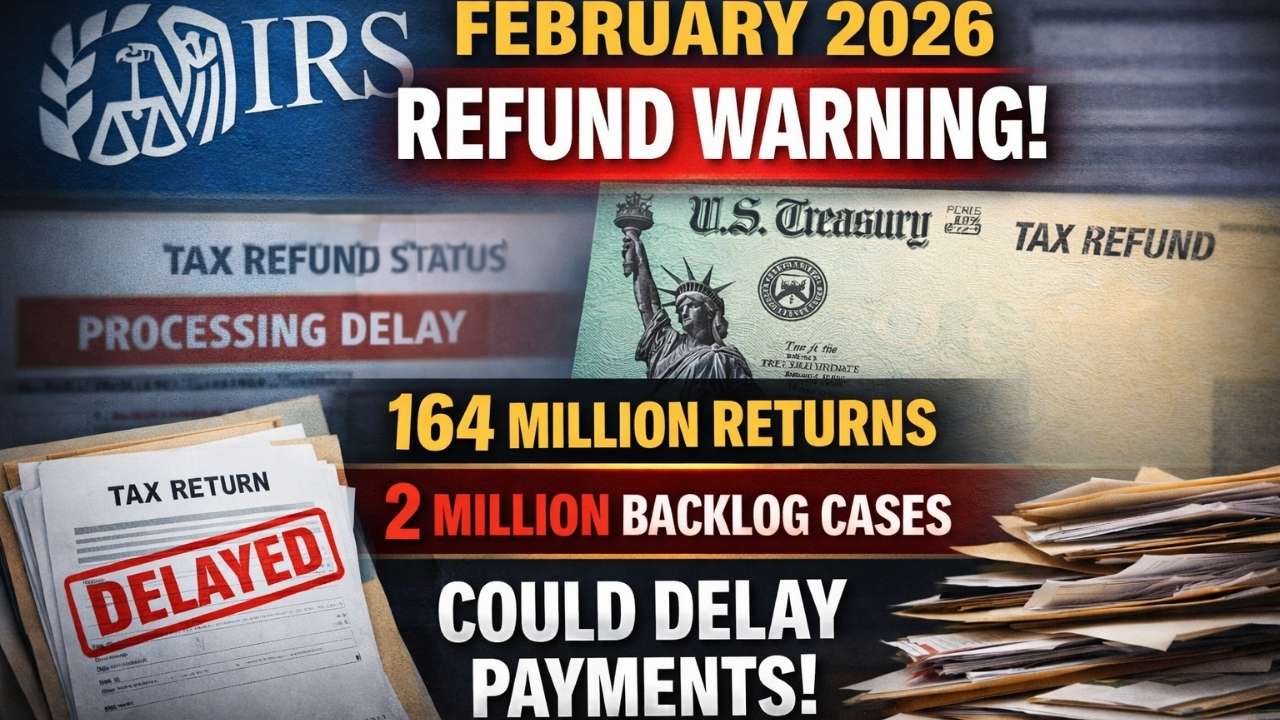
IRS February 2026 Refund Warning: The Internal Revenue Service has issued a refund warning for February 2026, alerting taxpayers that some refunds may take longer than expected. While many people anticipate quick payments, processing delays could affect specific groups this tax season.
Staffing shortages, unresolved backlogs, and extra fraud checks are among the main reasons for possible delays. Taxpayers who file on paper, claim certain credits, or face identity verification may experience longer waiting periods before receiving their refunds.
Also Read: UK £600 Cost of Living Boost 2026: DWP Payment Dates, Eligibility Rules, and Latest Official Update
IRS February 2026 Refund Warning Explained
The Internal Revenue Service has indicated that refund timelines may vary this season. Although electronic filers with direct deposit often receive refunds within weeks, others could see extended processing times.
Nearly 164 million tax returns are expected this year. With reduced staffing levels and about 2 million unresolved cases still pending, the agency may face operational strain that slows certain refunds.
Why Some Tax Refunds Are Delayed in February 2026
Processing delays are largely tied to manual reviews. Returns that require additional checks, corrections, or verification are removed from automated systems and handled separately.
Also Read: Federal Processing Alert 2026: How 1 Small Banking Error Could Freeze Your February Tax Refund
Paper filings also contribute to slower processing. These returns must be manually entered into the system, which adds weeks to the timeline compared to electronic submissions.
IRS February 2026 Refund Warning Overview
| Key Detail | Information |
|---|---|
| Tax Season Year | 2026 Filing Season |
| Expected Returns | Around 164 Million |
| Pending Backlog | Nearly 2 Million Cases |
| Most Affected Group | Paper Filers and Credit Claimants |
| Credit-Related Hold | Refunds Held Until Mid-February |
| Main Delay Causes | Staffing Cuts, Manual Reviews |
| Faster Option | E-File with Direct Deposit |
| Identity Checks | May Extend Timeline |
| Paper Check Rule | Issued Only If No Bank Details |
| Estimated Refund Window | Late February to Early March |
Staffing Cuts and IRS Backlog Impact on Refunds
The agency has fewer staff members compared to previous years. This reduction affects how quickly complex returns can be processed.
In addition, nearly 2 million unresolved cases remain in the system. These pending files increase workload pressure and may delay refunds for taxpayers requiring manual review.
Also Read: CPP Payment Boost 2026: Truth Behind The $2,900 Claim And 2.0% Inflation Increase Explained
Paper Filing Versus E-File Processing Time
Taxpayers who submit paper returns generally wait longer for refunds. Paper forms must be opened, reviewed, and manually entered before processing begins.
Electronic filing significantly speeds up the process. E-filed returns move through automated systems, reducing human handling and lowering the chance of delays.
Earned Income Tax Credit and ACTC Refund Hold Rules
Refunds involving the Earned Income Tax Credit and Additional Child Tax Credit cannot be issued before mid-February. This delay is required under federal anti-fraud laws.
Also Read: DWP £310 One Off Payment 2026: Truth Behind Pensioners’ Eligibility And Official Government Update
Even when filed early, these returns undergo additional screening. As a result, affected taxpayers may not receive refunds until late February or early March.
Identity Verification and Refund Processing Delays
Returns flagged for identity verification are temporarily paused. Discrepancies in Social Security numbers or income reporting can trigger these checks.
Once flagged, the return leaves the automated system. Processing resumes only after the taxpayer successfully completes verification, which may add several weeks.
Also Read: 2026 Social Security Benefits Reach $5,181: Full Eligibility Criteria and 2.8% COLA Impact
New Paper Check Policy and Direct Deposit Preference
Recent policy changes limit paper refund checks. The IRS generally issues paper checks only when direct deposit information is missing.
If bank details are not provided, refunds may be held for about six weeks before a check is mailed. Choosing direct deposit remains the fastest payment option.
Estimated Refund Timeline for February and March 2026
Most electronically filed returns with direct deposit may see refunds by mid to late February. These returns usually avoid manual review.
Also Read: Section 179 Deduction 2026 Explained With Full Farm Equipment Bonus Depreciation Benefits Guide
Returns claiming certain credits or requiring verification may extend into early March. Paper filers could face even longer waiting periods depending on processing demand.
How Taxpayers Can Avoid Refund Delays in 2026
Filing electronically is one of the most effective ways to prevent delays. Double-checking Social Security numbers and income details also reduces errors.
Selecting direct deposit instead of waiting for a paper check speeds up payment. Responding quickly to any IRS notice further helps keep refunds on track.
Also Read: New 2026 Social Security Checks Coming Soon What Beneficiaries Must Know About Payments

Dr Linda Steele is a Senior Lecturer at the Faculty of Law, University of Technology Sydney, and a member of the Law Health Justice Research Centre. She is also a Visiting Senior Fellow at the Faculty of Law, Humanities and the Arts, University of Wollongong.