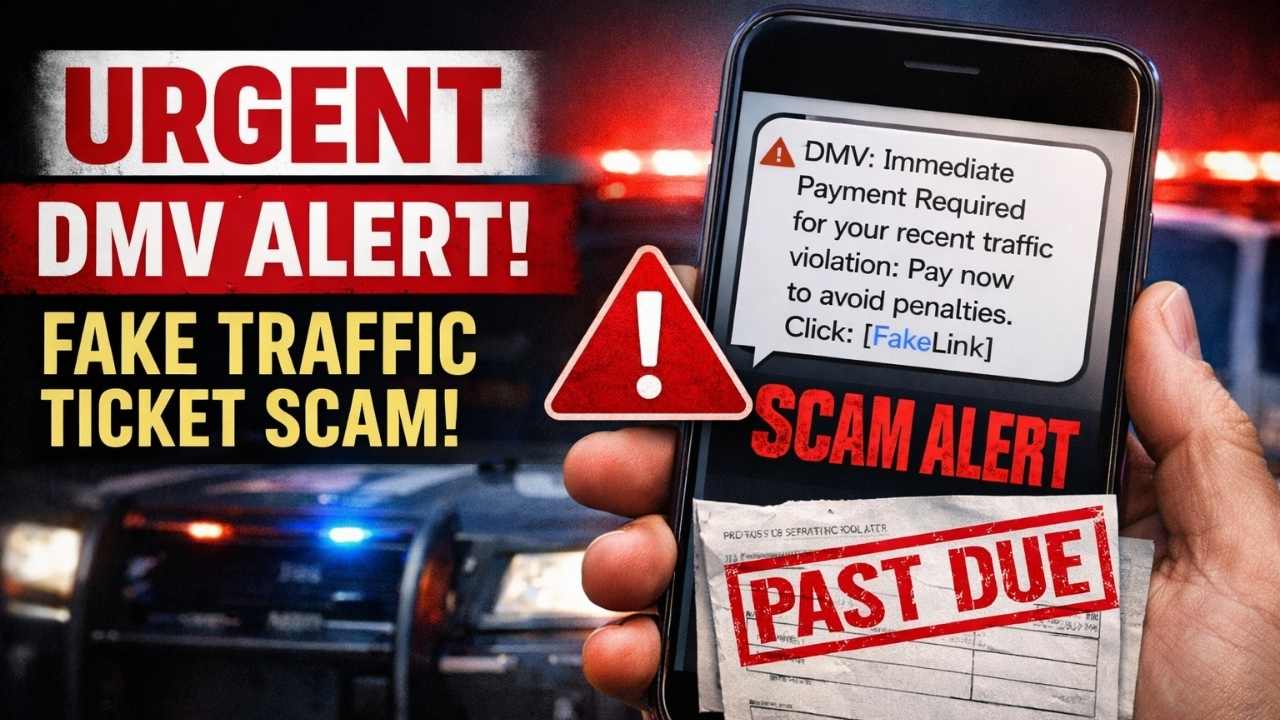
Urgent DMV Alert: State motor vehicle agencies across the country are issuing urgent warnings about a surge in fake traffic ticket payment text messages. The scam targets drivers by pretending to be official DMV communications demanding immediate payment for alleged violations.
Authorities say the messages are fraudulent and designed to steal personal information or financial details. Anyone who receives one of these texts is being advised not to click any links or respond.
Also Read: USDA Rural Loan Programs 2026: Complete Guide to $0 Down Home Financing
The alert comes as reports of victims losing money through so called smishing attacks continue to rise.
What the Fake DMV Text Messages Claim
The scam messages typically state that the recipient has an unpaid traffic ticket or outstanding violation. The text often includes a payment link and a short deadline.
Common claims in the messages include:
Also Read: $10.5 Million Kaiser Text Message Settlement: Claim Up to $75 Per Message
- License suspension if payment is not made immediately
- Vehicle registration cancellation
- Additional late fees or penalties
- Legal action or credit score impact
The language is designed to create urgency and pressure the recipient into acting quickly without verifying the information.
How the Scam Works
Scammers send mass text messages that appear to come from a Department of Motor Vehicles. In many cases, they simply use the generic term DMV even in states that officially use a different agency name.
The message includes a link to a fake website that mimics an official government payment portal. If a victim enters personal or payment information, that data is captured by criminals.
Also Read: $6000 Senior Tax Exemption Sparks Heated Debate Over Generational Fairness
In some cases, clicking the link may also expose the device to malware.
Agencies Warning the Public
Multiple state motor vehicle departments and federal consumer protection agencies have issued alerts about the scam.
Agencies connected to official warnings include:
Also Read: Millions Could Receive $200 Monthly Social Security Boost Under New 2026 Bill
- The Federal Trade Commission
- The Social Security Administration which has warned about similar impersonation scams
- Various state Departments of Motor Vehicles
Officials stress that legitimate traffic ticket notifications are not sent through unsolicited payment demand texts.
Red Flags That Indicate a Scam
There are several clear warning signs that a traffic ticket text is fake.
- The message demands immediate payment
- It includes a shortened or suspicious web link
- It threatens arrest or license suspension within hours
- It contains spelling or formatting errors
- It asks for sensitive information such as Social Security numbers
Government agencies generally send official notices by mail or direct you to log in through verified state websites.
Also Read: $2,000 Federal Deposits February 2026 Explained With Eligibility Rules, Timeline, and Latest Updates
What To Do If You Receive One
If a suspicious text arrives claiming you owe a traffic fine, take the following steps:
- Do not click the link
- Do not reply to the message
- Delete the text immediately
- Report the message to your mobile carrier
- Check your official state DMV website directly if you want to confirm your ticket status
You can also file a complaint with the Federal Trade Commission to help authorities track scam patterns.
Why These Scams Are Increasing
Text based scams are growing because they are inexpensive to send and can reach thousands of people instantly. Even if only a small percentage respond, scammers can make significant profits.
Also Read: Claim Marriage Tax Bonus 2026 With $29,200 Base Deduction And Rising 2026 Tax Benefits
Traffic ticket scams are particularly effective because many drivers worry about penalties tied to unpaid violations. The fear of losing driving privileges makes people more likely to act quickly.
Scammers also rely on the fact that many people conduct financial transactions on their phones, making it easier to trick someone into entering payment details.
How Legitimate Traffic Notices Are Delivered
Official traffic citations typically follow formal procedures.
Also Read: $1,390 IRS Payment Rumor Explained: Truth, Eligibility Facts, and Latest Official Updates Today
| Method of Contact | Used by Legitimate Agencies | Payment Requested by Text | Includes Threatening Language | Requires Immediate Action | Secure Website Access | Common With Scams |
|---|---|---|---|---|---|---|
| Mailed Notice | Yes | No | No | No | Yes | No |
| Official State Portal Login | Yes | No | No | No | Yes | No |
| Unsolicited Text With Link | No | Yes | Yes | Yes | No | Yes |
| Email From Unknown Address | Rare | Often | Yes | Yes | No | Yes |
| Phone Call Demanding Payment | No | Yes | Yes | Yes | No | Yes |
| In Person Court Notice | Yes | No | No | No | Yes | No |
If a message does not follow standard procedures, it should be treated with caution.
Protecting Yourself From Text Based Fraud
Basic digital safety habits can significantly reduce risk.
- Enable spam filtering on your phone
- Avoid clicking unknown links
- Use strong passwords and two factor authentication
- Keep your phone software updated
- Monitor bank accounts for unauthorized charges
Awareness is one of the most effective defenses against fraud.
Also Read: First-Time Home Buyer Grants 2026 Update: With $25,000 Down Payment Assistance Explained Clearly
FAQs
Do DMVs ever send payment links by text?
In most states, no. Official agencies typically direct users to secure websites and do not demand payment through unsolicited text messages.
What happens if I clicked the link?
Immediately monitor your bank and credit card accounts. If you entered payment details, contact your financial institution to report potential fraud.
Can scammers really suspend my license?
No. Only official state authorities can take licensing action, and they do not do so through random text messages.
Also Read: $500 Every Month Guaranteed Income Programs In America: Who Qualifies And How Payments Work
Should I reply STOP to unsubscribe?
It is safer not to respond at all. Replying confirms that your phone number is active.
How can I confirm if I have a real ticket?
Visit your official state motor vehicle department website directly by typing the address into your browser.
Where can I report the scam?
You can file a complaint with the Federal Trade Commission and notify your state’s consumer protection office.
Also Read: Truth About Medicare Giveback 2026 And The $174 Social Security Increase Explained Clearly
Final Thoughts
The fake DMV traffic ticket payment text scam is designed to create panic and pressure quick payment. State agencies and consumer protection officials are urging drivers to stay alert and avoid clicking suspicious links. Verifying information directly through official government websites remains the safest way to handle any concerns about traffic violations.

Dr Linda Steele is a Senior Lecturer at the Faculty of Law, University of Technology Sydney, and a member of the Law Health Justice Research Centre. She is also a Visiting Senior Fellow at the Faculty of Law, Humanities and the Arts, University of Wollongong.